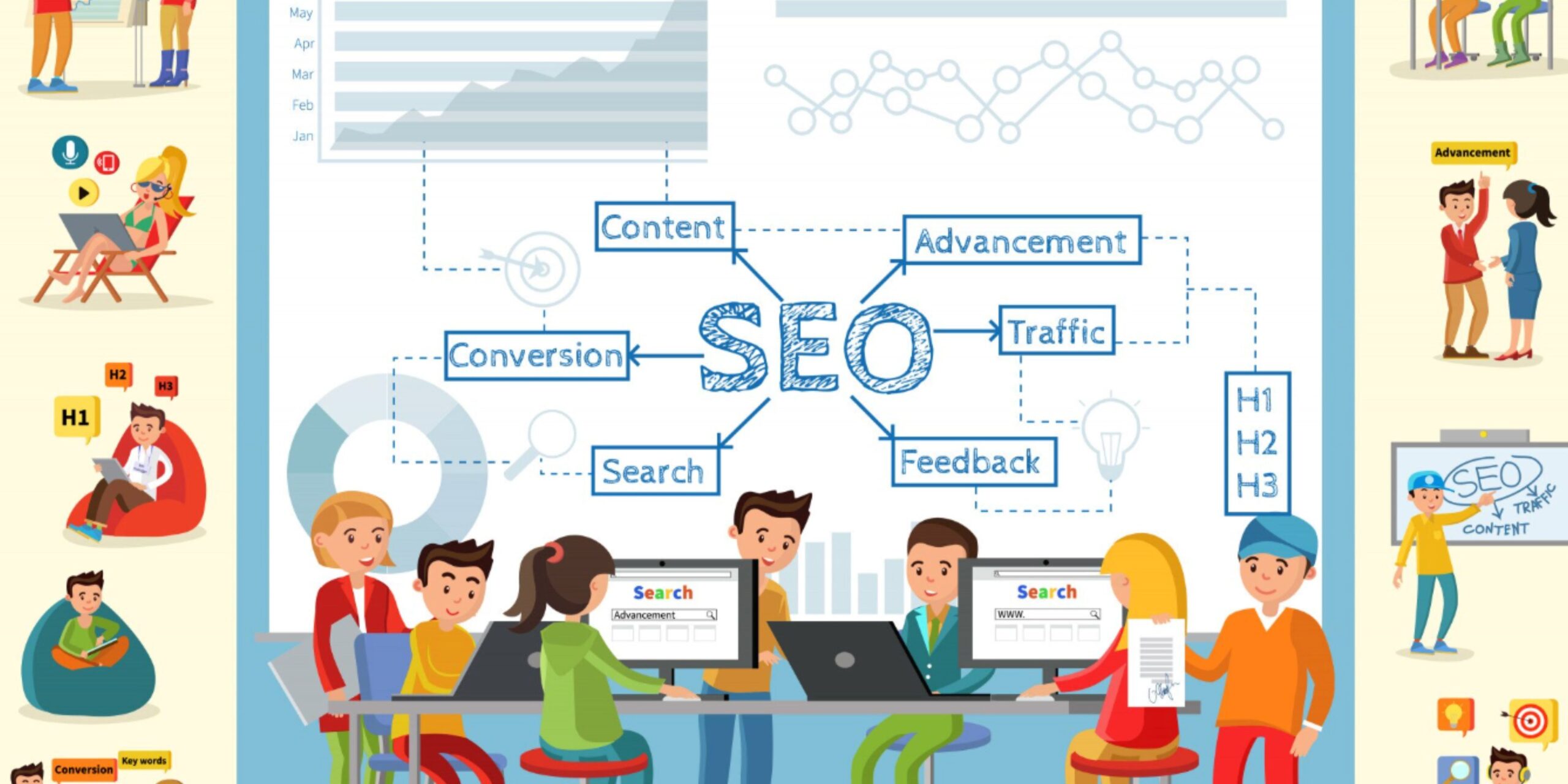

Understanding our customers’ paths to becoming loyal advocates is key in digital marketing. The SaaS customer journey is more than just interactions. It’s a map that helps us create meaningful connections with our audience.
By mapping this journey, we find key touchpoints and areas to improve. This leads to more targeted and successful SEO strategies. We can tailor our content to meet our customers’ needs at every stage, improving their experience.
Key Takeaways
- Understanding the SaaS customer journey is essential for effective SEO content.
- Mapping the customer journey helps identify key touchpoints and areas for improvement.
- Tailoring content to meet customer needs at every stage enhances their experience.
- Successful SEO strategies rely on a deep understanding of the customer’s path.
- Customer journey mapping leads to more targeted content creation.
Understanding the SaaS Customer Journey
For SaaS businesses, knowing the customer journey is key to a better SEO content funnel. The journey shows how a customer moves from first learning about your product to becoming a loyal fan.
What is the Customer Journey?
The customer journey is all the interactions a customer has with your brand. It starts when they first learn about you and ends when they become a strong supporter. It’s a detailed look at what they need and feel at each step.
By getting on this journey, we can make our marketing better. This includes buyer journey SEO. It helps improve the customer’s experience and grows our business.
Stages of the Customer Journey
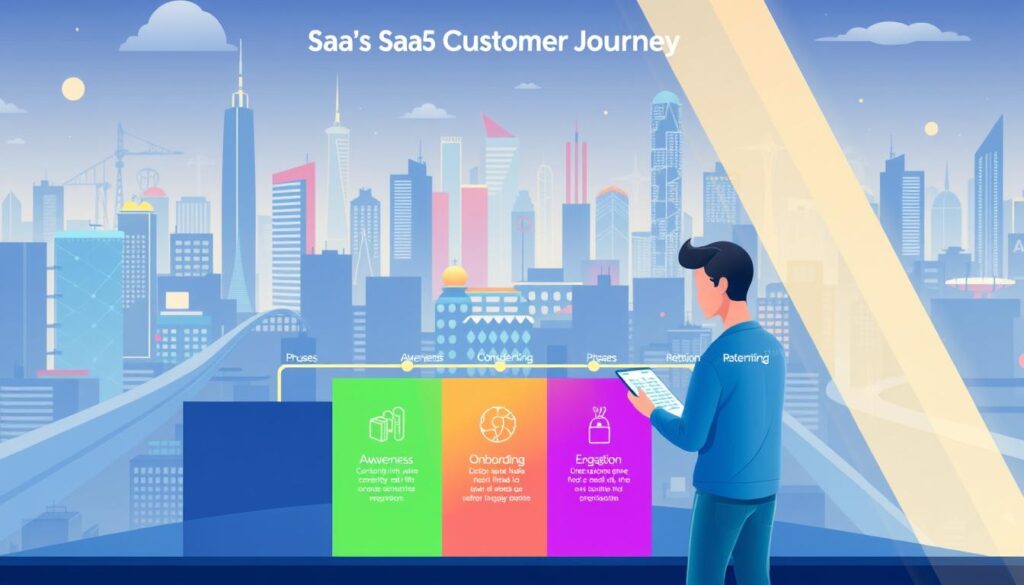
The SaaS customer journey has several important stages:
- Awareness: The customer first learns about our product or service.
- Consideration: They compare our product to others.
- Purchase: They choose to buy from us.
- Adoption: They start using our product.
- Advocacy: They become loyal supporters of our brand.
At each stage, we need to use different content and SEO strategies. This helps guide the customer smoothly through their journey.
Importance of Mapping the Journey
Mapping the customer journey is vital for SaaS companies. It lets us:
- Know what the customer needs and feels at each stage.
- Make our content and SEO fit those needs.
- Enhance the customer’s experience.
- Grow our business with focused marketing.
Marketing experts say, “Understanding the customer journey is essential for a customer-focused marketing plan.” By mapping the journey, we can make a more effective SEO content funnel. This guides customers through each stage, boosting conversions and loyalty.
Key Phases in the SaaS Customer Journey
The SaaS customer journey has several key phases that shape SEO content. Knowing these phases is vital for a targeted SEO strategy. It helps connect with our audience effectively.
Awareness Stage
In the awareness stage, people first learn about our product or service. Our SEO strategy should focus on creating content that meets their needs and solves their problems.
Using keywords related to our SaaS solutions boosts our visibility in search results. This grabs the attention of possible customers.
Key strategies for the awareness stage include:
- Creating engaging blog posts and articles
- Utilizing social media platforms to promote our content
- Optimizing our website for relevant keywords
Consideration Stage
In the consideration stage, people compare our product with others. Our SEO efforts should highlight what makes our SaaS unique.
By creating content like case studies and whitepapers, we show why our solution is better. This helps people see the value in our product.
“The key to winning customers is not just to be better, but to be different.” – Unknown
Our content at this stage should focus on the benefits and features of our product. It should show how our product solves problems better than others.
Decision Stage
The decision stage is when people choose to buy our SaaS product. Our SEO strategy should aim at content that encourages action.
Optimizing our landing pages and using persuasive calls-to-action can boost conversion rates. This helps more people buy our product.
| Stage | SEO Strategies | Content Types |
|---|---|---|
| Awareness | Keyword optimization, social media promotion | Blog posts, articles |
| Consideration | Comparative content, case studies | Whitepapers, comparison guides |
| Decision | Conversion-focused SEO, landing page optimization | Landing pages, product demos |
Integrating SEO into Each Phase
To boost visibility and drive sales, it’s key to add SEO to every step of the SaaS customer journey. This makes sure the right people see your content at the right time. It also improves your SEO content funnel.
Targeting Keywords for Awareness
In the awareness stage, focus on targeting keywords that people use when looking for your product or service. Understand the intent behind these keywords and create content that meets your audience’s needs.
For example, a SaaS company with project management tools might aim for keywords like “project management software” or “team collaboration tools.” Optimizing your content for these keywords can help you show up more in search results.
| Keyword | Search Volume | Competition |
|---|---|---|
| Project management software | 2,900 | High |
| Team collaboration tools | 1,300 | Medium |
Optimizing Content for Consideration
In the consideration stage, people are looking at different solutions. Here, optimizing content to compare options is key. Create detailed content that shows off your product’s benefits and what makes it special.
“The key to successful SEO is not just about attracting traffic, but about attracting the right traffic.”Rand Fishkin, Co-founder of Moz
Using long-tail keywords can help attract quality leads. For instance, “project management software for remote teams” targets a specific market segment.
Conversion-Focused SEO Strategies
At the decision stage, focus on conversion-focused SEO strategies. Optimize landing pages, use clear CTAs, and make sure the user experience is smooth and convincing.
By using these strategies in every phase, businesses can build a strong SEO content funnel. This funnel drives conversions and increases revenue.
Creating Buyer Personas
To make great SaaS content, we must first create detailed buyer personas. These are fictional versions of our ideal customers, based on real data and research. By knowing their needs, likes, and problems, we can make content that really speaks to them.
Identifying Customer Segments
Finding customer segments is key to making buyer personas. We need to look at our customers to find common traits, behaviors, and demographics. This means collecting data from surveys, feedback forms, and social media.
Let’s say we’re a SaaS company that offers project management tools. Our customer segments might include:
- Project managers in IT
- Marketing team leads
- Small business owners
By segmenting our customers, we can make content that really hits the mark for each group.
| Customer Segment | Characteristics | Content Preferences |
|---|---|---|
| Project Managers in IT | Tech-savvy, detail-oriented | In-depth guides, case studies |
| Marketing Team Leads | Creative, data-driven | Infographics, webinars |
| Small Business Owners | Multitasking, cost-conscious | Simple tutorials, ROI-focused content |
Tailoring Content to Different Personas
Once we know our customer segments, we can make content for each persona. This means understanding their buyer journey and making content that meets their needs at each step.
For example, a project manager in IT might want detailed product info during the consideration stage. We can create in-depth guides and case studies to help them decide.
By making content for different personas, we can boost engagement and conversion rates. It’s about talking directly to our audience and giving them what they need to move through their buyer journey.
Mapping Content to the Customer Journey
A good SaaS SEO plan maps content to the customer journey’s stages. This makes sure our content attracts and guides customers. It helps them from first awareness to making a purchase.
What Content Works for Each Stage?
Each stage needs different content types. For example, blog posts and infographics draw in new customers during awareness. When customers think about buying, case studies and whitepapers offer deep insights into our offerings.
Utilizing Different Content Formats
Using various content formats keeps customers interested. We use video content for demos, podcasts for industry news, and interactive content like quizzes. A marketing pro says, “Content is king, but context is queen, and together they can rule the kingdom of customer engagement.”
Our content plan should meet customer needs at each stage. For example, customer testimonials and comparison guides help in the decision stage. By mixing our content with the customer journey, we boost our SEO and drive sales.
In summary, mapping content to the customer journey is key. It’s not just about making content; it’s about making the right content at the right time. This way, we improve our SaaS SEO and increase conversions.
Tools for Customer Journey Mapping
Understanding the customer journey is key. The right tools help us see how customers behave. This way, we can make our SEO content better.
Effective Mapping Software
Good mapping software is essential for seeing the customer journey. Tools like UXCam give us insights into how users interact with our brand.
Effective mapping software has important features:
- It shows the customer journey visually.
- It finds pain points and areas to improve.
- It analyzes how customers behave at each stage.

Using Analytics for Insights
Analytics tools are vital for understanding customer behavior. They help us refine our SEO strategies. By looking at data from different sources, we learn how customers interact with us.
Here’s a table of key analytics tools and what they do:
| Analytics Tool | Function | Benefit |
|---|---|---|
| Google Analytics | Tracks website traffic and behavior | Provides insights into customer behavior |
| UXCam | Analyzes user behavior and feedback | Helps identify pain points and areas for improvement |
| SEMrush | Analyzes SEO performance and competitor strategies | Provides insights into SEO performance and areas for improvement |
By using mapping software and analytics tools together, we get a full picture of the customer journey. This helps us make our SEO content better for our customers.
Analyzing Customer Behavior
To make great SaaS persona content, we need to know what our target audience does. We must understand their behavior by looking at their actions and using data to improve our marketing.
Understanding User Intent
User intent is why someone searches for something or interacts with our content. Understanding user intent is key. It helps us make our SaaS customer journey SEO better fit what our audience needs at each step.
By knowing what people are looking for, we can make content that really helps them. This makes our site better for search engines and improves how users feel when they visit.

Leveraging Data to Refine Strategies
With a clear idea of user intent, we can use data to make our SEO better. We look at things like how often people click, how long they stay, and how many convert. This tells us where we can get better.
Data-driven insights help us tweak our content and SEO to match what our audience likes. By always checking and tweaking, we can do better in SaaS customer journey SEO.
Some important data to look at when we’re making changes include:
- User engagement metrics, such as time on page and scroll depth
- Conversion rates and goal completions
- Search query data and keyword trends
By looking at these data points and making changes, we can make a SaaS customer journey SEO plan that really works for our business.
Competitor Analysis in SaaS SEO
To lead in the SaaS market, analyzing your competitors’ SEO is key. It means spotting their strategies and finding content gaps your business can fill. By knowing what competitors do and finding content gaps, your business can make SEO content that beats theirs. This attracts more customers to your side.
Identifying Competitors’ Strategies
First, you need to find out what your competitors’ SEO plans are. Look at their keywords, content types, and link building. Tools like Ahrefs or SEMrush can help you see their SEO moves.
Focus on these areas when analyzing competitors:
- Keyword research: What keywords are they targeting?
- Content quality: How engaging and informative is their content?
- Link building: Where are they getting their backlinks from?
Finding Gaps in Competitor Content
After spotting competitors’ strategies, find gaps in their content. These could be untapped keywords, unaddressed customer needs, or missing topics. By filling these gaps, you can draw in customers who aren’t fully served by your rivals.
Here’s a table showing how to spot competitor content gaps:
| Competitor | Keyword | Content Type | Gap Identified |
|---|---|---|---|
| Competitor A | SaaS SEO | Blog Post | Lack of detailed guides |
| Competitor B | Buyer Journey SEO | Video Content | No content on advanced SEO strategies |
By studying competitors and spotting content gaps, you can improve your SEO strategy. Create high-quality, targeted content that meets your customers’ needs. This keeps you ahead of the competition.
Measuring Success in SaaS SEO
Understanding the impact of our SaaS SEO strategies requires a deep dive into performance metrics. To effectively measure success, we must identify and track the right indicators.
Key Performance Indicators (KPIs)
To gauge the effectiveness of our SaaS SEO efforts, we focus on several key performance indicators. These include organic traffic, keyword rankings, and conversion rates. By monitoring these KPIs, we can refine our SEO strategies to improve online visibility and drive more conversions.
- Organic traffic: The number of visitors coming to our site through organic search.
- Keyword rankings: Our position in search engine results for targeted keywords.
- Conversion rates: The percentage of visitors who complete a desired action.
Tools for Tracking Success
Several tools are available to help us track our SaaS SEO success. These include Google Analytics, SEMrush, and Ahrefs. By leveraging these tools, we can gain valuable insights into our SEO performance and make data-driven decisions.
For instance, Google Analytics provides detailed information on our website traffic, including the sources of our traffic and the behavior of our visitors. SEMrush and Ahrefs offer extensive SEO audits and keyword tracking capabilities. This enables us to optimize our content effectively.
By combining the right KPIs with the appropriate tools, we can accurately measure our SaaS SEO success and continually improve our strategies.
Continuous Improvement of SEO Strategy
Improving our SEO strategy is key to success in the SaaS world. It helps us keep up with changing customer needs and stay ahead. We use the SaaS customer journey SEO to make our SEO content funnel more effective.
Importance of SEO Audits
Regular SEO audits are vital for spotting areas to improve. They help us:
- Check how our website’s SEO is doing
- Find technical problems that affect our rankings
- See where we can make our content better
With this info, we can craft a better SEO plan that meets our goals.
Updating Content Based on Performance
It’s important to update content based on how well it does. This means:
- Looking at how well our content does
- Improving content that doesn’t do well
- Making new content for new trends and needs
By always updating and improving our content, we keep our SEO strategy strong. This keeps our SEO content funnel effective.
In short, keeping our SEO strategy up to date is essential for success in SaaS. By being proactive and flexible, we can reach our full SEO and growth goals.
Common Mistakes in SaaS SEO
Effective SaaS SEO needs a deep understanding of best practices and knowing common mistakes. By knowing what goes wrong, we can better handle the complexities of search engine optimization for our SaaS businesses.
One big error in SaaS SEO is keyword stuffing. Keyword stuffing means putting too many keywords in your content to try to rank higher. But, it hurts the user experience and breaks search engine rules, which can lead to penalties.
Avoiding Keyword Stuffing
To avoid keyword stuffing, we should make high-quality, engaging content. This content should naturally include relevant keywords. We should use synonyms and related phrases, making sure our content is smooth and valuable to the reader.
Long-tail keywords are also key but often ignored in SaaS SEO. Not using these specific phrases can mean missing out on valuable traffic that matches our content and services better.
Failing to Target Long-Tail Keywords
Long-tail keywords are specific phrases with lower search volumes but are less competitive and more targeted. By using long-tail keywords in our SEO strategy, we can attract more qualified leads who are closer to buying.
For example, instead of aiming for “SEO software,” we could target “SEO software for SaaS companies.” This makes our content more relevant to our target audience’s needs.
By knowing these common mistakes and adjusting our strategies, we can boost our SaaS SEO efforts. This means not just avoiding mistakes but also being proactive with SEO. We should create content for the buyer journey and SaaS personas tailored to our audience’s needs.
Future Trends in SaaS SEO
Future trends in SaaS SEO will include voice search optimization and artificial intelligence. It’s key for SaaS companies to keep up with these new technologies.
Voice search optimization is a big trend. Voice assistants like Siri and Google Assistant are getting more popular. This means we need to optimize for voice search differently.
Voice Search Optimization
To get better at voice search, we should use natural language and long-tail keywords. Our content should answer questions clearly and quickly. This helps us show up in voice search results.
Here are some tips for voice search optimization:
- Use natural language processing to understand and mimic user queries
- Optimize for long-tail keywords that reflect conversational speech
- Create FAQ sections on websites to answer common questions
The Role of AI in SEO
Artificial intelligence is also a big deal in SaaS SEO. AI can look at lots of data to find patterns and insights. This helps us make our SEO strategies better.
AI can help in many ways, like:
- Content generation: AI tools can help create great, relevant content
- Predictive analytics: AI can predict what users will do and help us tailor our SEO
- Personalization: AI can make our content more personal and engaging
By using these future trends in SaaS SEO, we can keep our content fresh and competitive in the digital world.
Conclusion and Next Steps
Understanding the SaaS customer journey is key to making great SEO content. We can make our content better by knowing what our audience needs at each step. This goes from when they first learn about us to when they decide to buy.
Key Takeaways
We’ve seen how important SEO is at every step of the journey. We’ve also learned about creating buyer personas and mapping content to meet their needs. By doing these things, we can boost our SEO and get more people to buy from us.
Actions to Take Today
To start, we should look at our current content and see where we can make it better. We can also use tools to learn more about how our customers behave. By doing these things, we can make our SEO work better for our audience.
SaaS Customer Journey Mapping FAQ
What is the SaaS customer journey, and why is it important for SEO content?
The SaaS customer journey is the path a customer takes with a brand. It starts with awareness and ends with loyalty. Knowing this journey helps create SEO content that speaks to the audience and grows the business.
How do we identify the key phases in the SaaS customer journey?
The journey has three main phases: awareness, consideration, and decision. Understanding these helps businesses craft content that meets customer needs at each step. This leads to better SEO strategies.
What is the role of buyer personas in SaaS SEO?
Buyer personas are key to understanding the SaaS customer journey. By identifying and tailoring content to different personas, businesses can connect with their audience. This improves engagement and conversion rates.
How do we integrate SEO into each phase of the SaaS customer journey?
SEO is integrated by targeting the right keywords in the awareness stage. Then, optimize content for consideration and use conversion-focused strategies in the decision stage. This ensures content reaches the right people at the right time.
What tools are used for customer journey mapping?
Tools like mapping software and analytics help understand customer behavior. They show how customers interact with the brand, identify pain points, and guide SEO content optimization.
How do we analyze customer behavior to refine our SEO strategies?
Analyzing behavior involves understanding user intent and using data to improve SEO. This is done by analyzing customer behavior with analytics tools, leading to better engagement and conversions.
What is the importance of competitor analysis in SaaS SEO?
Competitor analysis helps spot gaps in their content. This allows businesses to create better SEO content, attracting more customers and surpassing competitors.
How do we measure the success of our SaaS SEO efforts?
Success is measured by tracking key performance indicators (KPIs). The right tools help refine SEO strategies, improve visibility, and drive conversions.
What are some common mistakes to avoid in SaaS SEO?
Avoid keyword stuffing and neglecting long-tail keywords. These practices make SEO content less effective and unsustainable.
How can we stay ahead of future trends in SaaS SEO?
Stay ahead by optimizing for voice search and understanding AI’s role in SEO. This prepares businesses for the changing SEO landscape.
What is the role of content in the SaaS customer journey?
Content guides customers through their journey, from awareness to conversion. By mapping content to the journey, businesses create a cohesive SEO strategy.
How often should we update our SEO strategy?
SEO strategies must be updated regularly to stay competitive in the SaaS landscape. Regular audits and content updates keep SEO content relevant and effective.