16 Best Website Traffic Trackers and Analytics Tools in 2026 (Free and Paid)
Compare 16 website traffic trackers for 2026: free tools like GA4, Clarity and Cloudflare, privacy-first picks, and checkers for any site's monthly visitors.
By Sumit Kumar··
ANALYTICS
By Sumit Kumar. 15+ years in SEO and analytics. Updated November
2026.
A website traffic tracker tells you how many people visit your site,
where they come from and what they do once they land. In 2026 you can
get most of that for free. The hard part is picking the right tool,
because "traffic tracker" can mean two very different things:
Tracking your own website: visitors, sources,
pages, conversions. You add a small code snippet and get exact
numbers.
Checking any website's traffic: a competitor's
monthly visitors, top pages and traffic sources. You type in a domain
and get estimates.
This guide covers both. GA4, Search Console, Semrush and Ahrefs are
part of my day-to-day SEO work, and I've split the tools into those two
groups so you can jump straight to what you need.
Best free tool for Google search traffic: Google
Search Console
Best free heatmaps and session recordings:
Microsoft Clarity
Best free, cookie-free tracker: Cloudflare Web
Analytics
Best privacy-first paid tracker:
Plausible
Best open-source tracker you can self-host:
Matomo
Best for apps and product teams:
PostHog
Best free way to check a competitor's traffic:
Similarweb (free plan) or Ahrefs' free Website Traffic Checker
Best paid competitor traffic tool:
Semrush
What to look for in a website traffic tracker
Price and free limits: many "free" tools cap
events, sites or data history.
Privacy and consent: cookie-free tools are
simpler under GDPR and similar laws, and don't lose visitors who reject
cookies.
Ease of use: GA4 is powerful but complex.
Simpler tools show the basics on one screen.
Real-time view: useful if you run launches,
sales or live campaigns.
AI search tracking: can it show visits from
ChatGPT, Perplexity, Gemini and Copilot?
Accuracy: your own tracker counts real visits.
Competitor tools only estimate, so treat their numbers as
directional.
Website traffic trackers compared (2026)
Prices are starting prices in USD unless noted, checked in November
2026. Vendors change plans often, so confirm on their pricing page
before you buy.
#
Tool
Best for
Free option
Paid from
Cookie-free option
1
Google Analytics 4
Full traffic and conversion tracking
Yes, free
GA4 360 (enterprise)
No
2
Google Search Console
Google search clicks and queries
Yes, free
n/a
Yes (no site code)
3
Microsoft Clarity
Heatmaps, recordings, AI bot traffic
Yes, free
n/a
No
4
Cloudflare Web Analytics
Simple, private traffic stats
Yes, free
n/a
Yes
5
Umami
Open-source, lightweight stats
Free self-hosted and Hobby cloud plan
Paid cloud plans
Yes
6
Matomo
Self-hosted GA4 alternative
Free self-hosted
$26/mo cloud (50K hits)
Configurable
7
Plausible
Privacy-first, easy dashboard
30-day trial
$9/mo
Yes
8
StatCounter
Visitor logs and live view
Free basic plan
From €9/mo
No
9
Hotjar (Contentsquare)
Heatmaps plus surveys
Free basic plan
About $32/mo (annual)
No
10
Crazy Egg
Heatmaps and A/B tests
Free trial
$24/mo
No
11
PostHog
Product and web analytics in one
1M events/mo free
Pay as you go
Configurable
12
Mixpanel
Product and funnel analytics
1M events/mo free
$0.28 per 1K extra events
No
13
Similarweb
Any site's traffic and sources
Free, limited
$199/mo, or $1,500/yr
n/a
14
Semrush
Competitor traffic plus SEO
Free, limited
$139.95/mo
n/a
15
Ahrefs
Competitor organic traffic
Free Website Traffic Checker
$129/mo
n/a
16
Ubersuggest
Budget competitor checks
Free, limited daily searches
$29/mo
n/a
Part 1: Website traffic trackers for your own site
These tools need a small code snippet (or a DNS change) on your site.
In return you get real visitor numbers, not estimates.
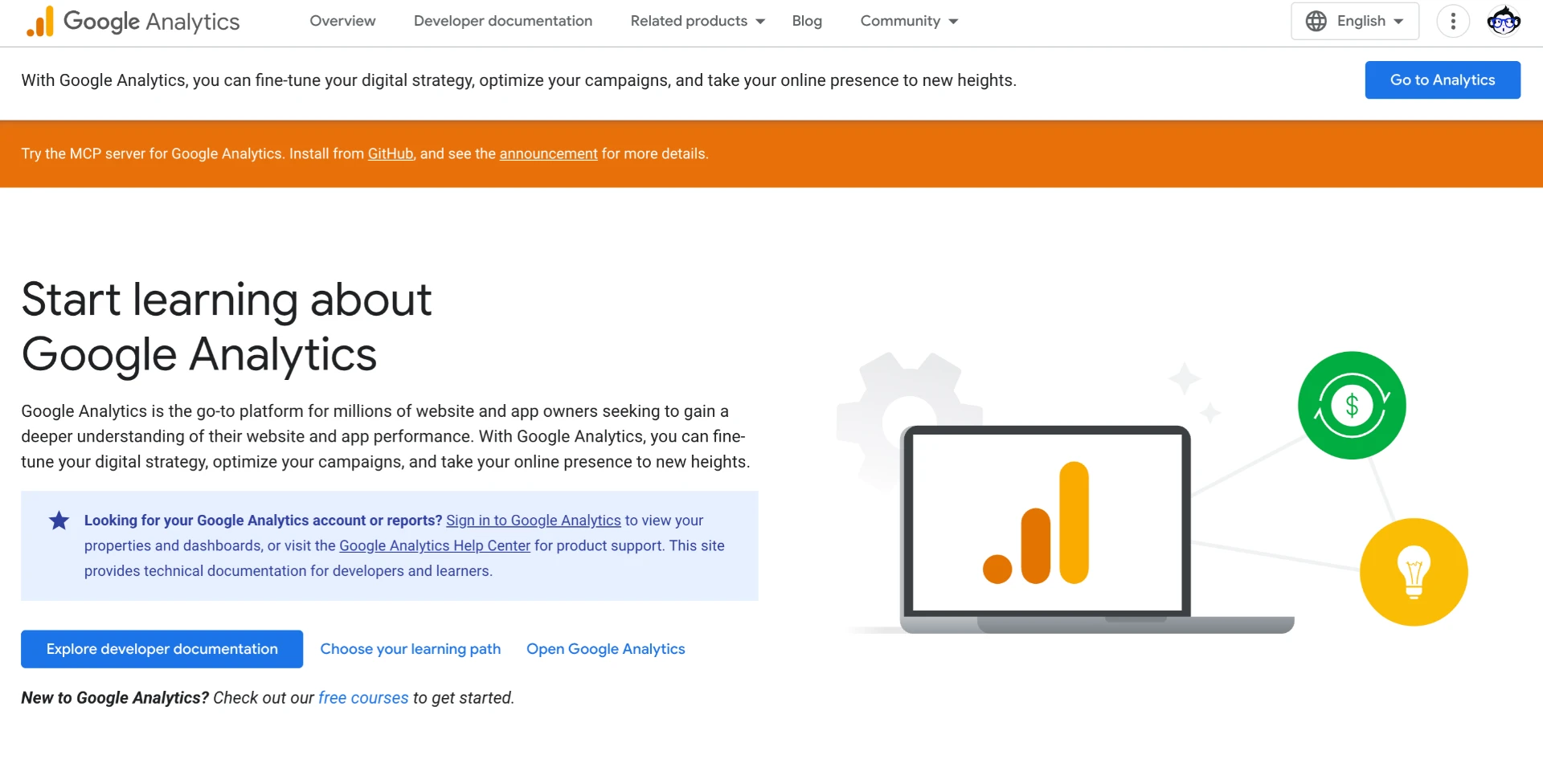
1. Google Analytics 4: best free website traffic tracker overall
Google Analytics 4 dashboard
Price: Free. Google Analytics 360 is the paid
enterprise version.
GA4 is still the default for most websites, and for good reason. It
tracks visitors, traffic sources, landing pages, events and conversions,
and it connects to Google Ads, Search Console and BigQuery at no extra
cost.
The biggest change lately is AI. Google added Analytics
Advisor, a chat assistant built on Gemini that answers
questions about your data, explains traffic spikes or drops, and
suggests next steps. It started rolling out to English-language accounts
in December 2025 (Search
Engine Land).
Pros: free, very deep, real-time report,
e-commerce tracking, predictive audiences
Cons: steep learning curve, data can be hidden
by thresholds, needs a cookie banner in many countries
Good to know: set up key events (form fills,
purchases, calls) on day one, or GA4 only tells you about visits, not
results. Our GA4
complete guide and GA4 metrics
for SEO walk through the setup.
[add image: Google Analytics 4]
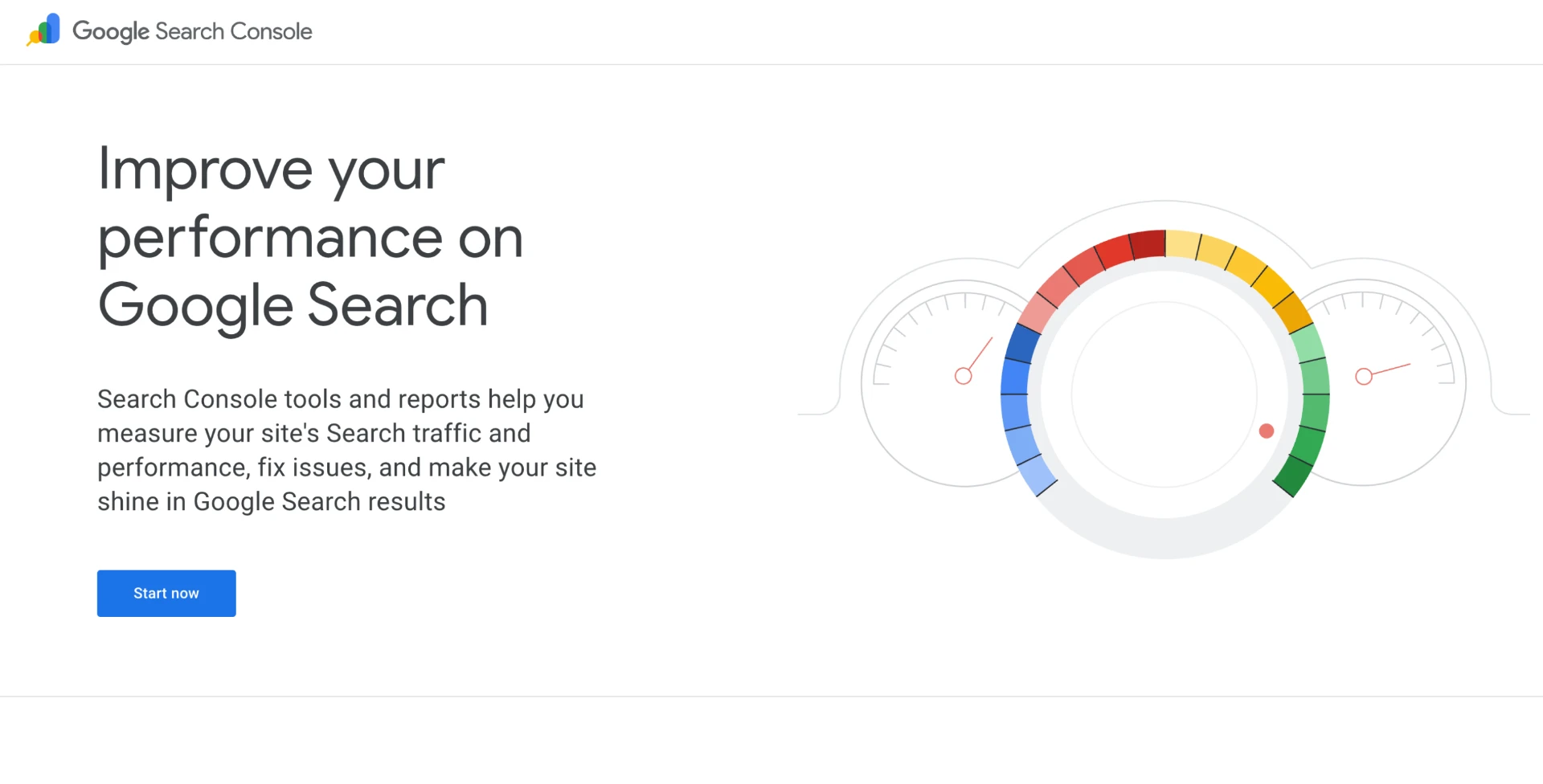
2. Google Search Console: best free tool for Google search traffic
Price: Free.
If you want to know how much traffic you get from Google and for
which searches, Search Console is the source of truth. It shows clicks,
impressions, click-through rate and average position for every query and
page, with 16 months of history. Clicks from AI Overviews and AI Mode
are counted inside the normal search report rather than shown
separately.
Pros: free, comes straight from Google, shows
the exact queries people search, flags indexing problems
Cons: Google only, no on-site behaviour, data
arrives a couple of days late
Good to know: look for queries with lots of
impressions but few clicks. A better title and meta description often
lifts them fast.
Google Search Console dashboard
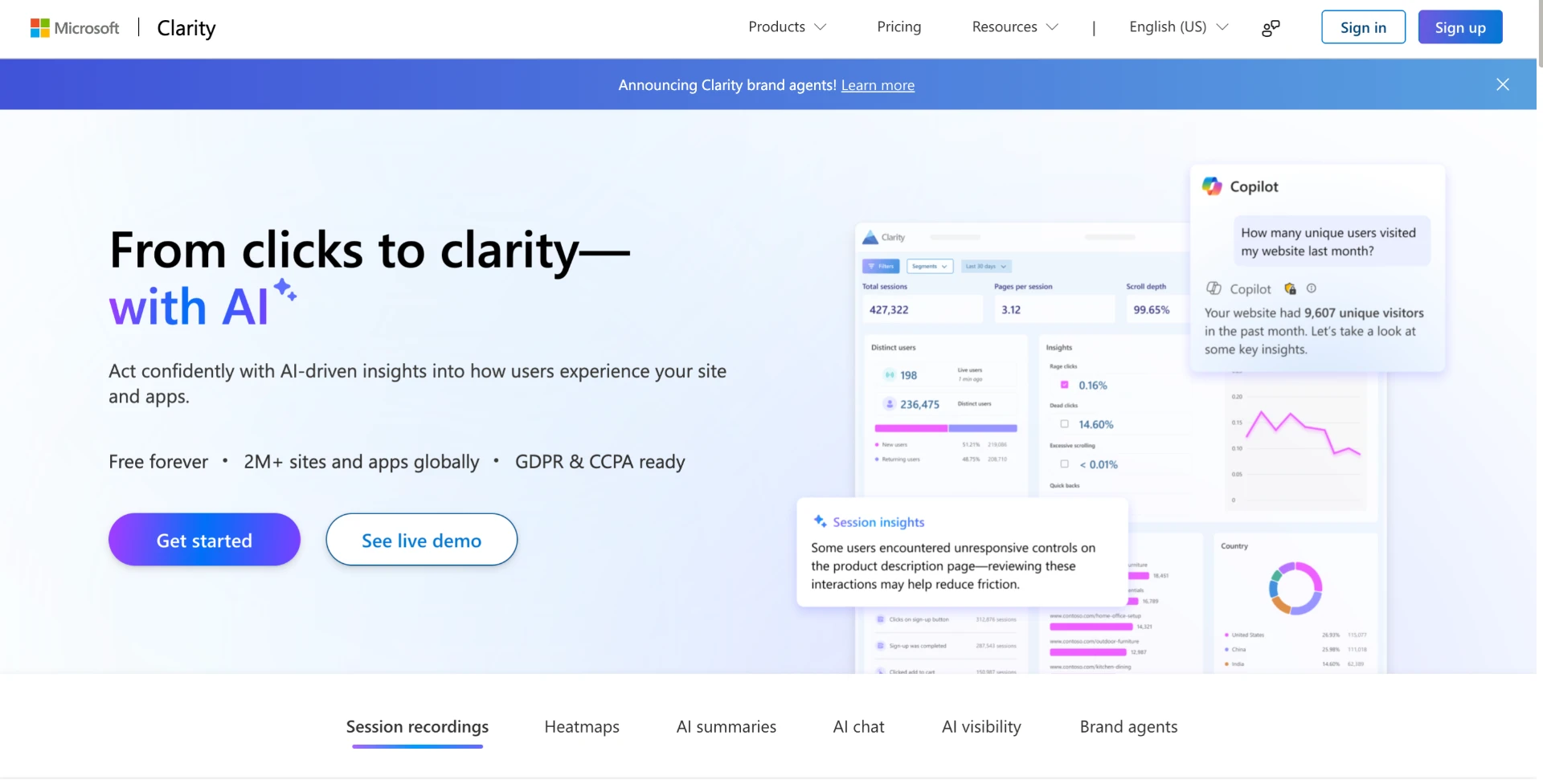
3. Microsoft Clarity: best free heatmaps and session recordings
Price: Free, with no traffic limits on the features
below.
Clarity shows what visitors actually do: heatmaps, scroll depth,
session recordings, rage clicks and dead clicks. It's the free
alternative to Hotjar and Crazy Egg, and it has quietly become an AI
search tool too:
AI bot traffic dashboard (January 2026): shows
how often ChatGPT, Claude, Gemini, Copilot and Perplexity crawl your
site
Citations (general availability, May 2026):
shows how often your pages are cited in AI answers on Microsoft surfaces
like Copilot and Bing (Digital
Applied)
Pros: free, easy setup, Copilot summaries of
sessions, connects to GA4
Cons: not a full traffic analytics tool,
recordings need care on pages with personal data
Microsoft Clarity dashboard
4. Cloudflare Web Analytics: best free cookie-free tracker
Price: Free.
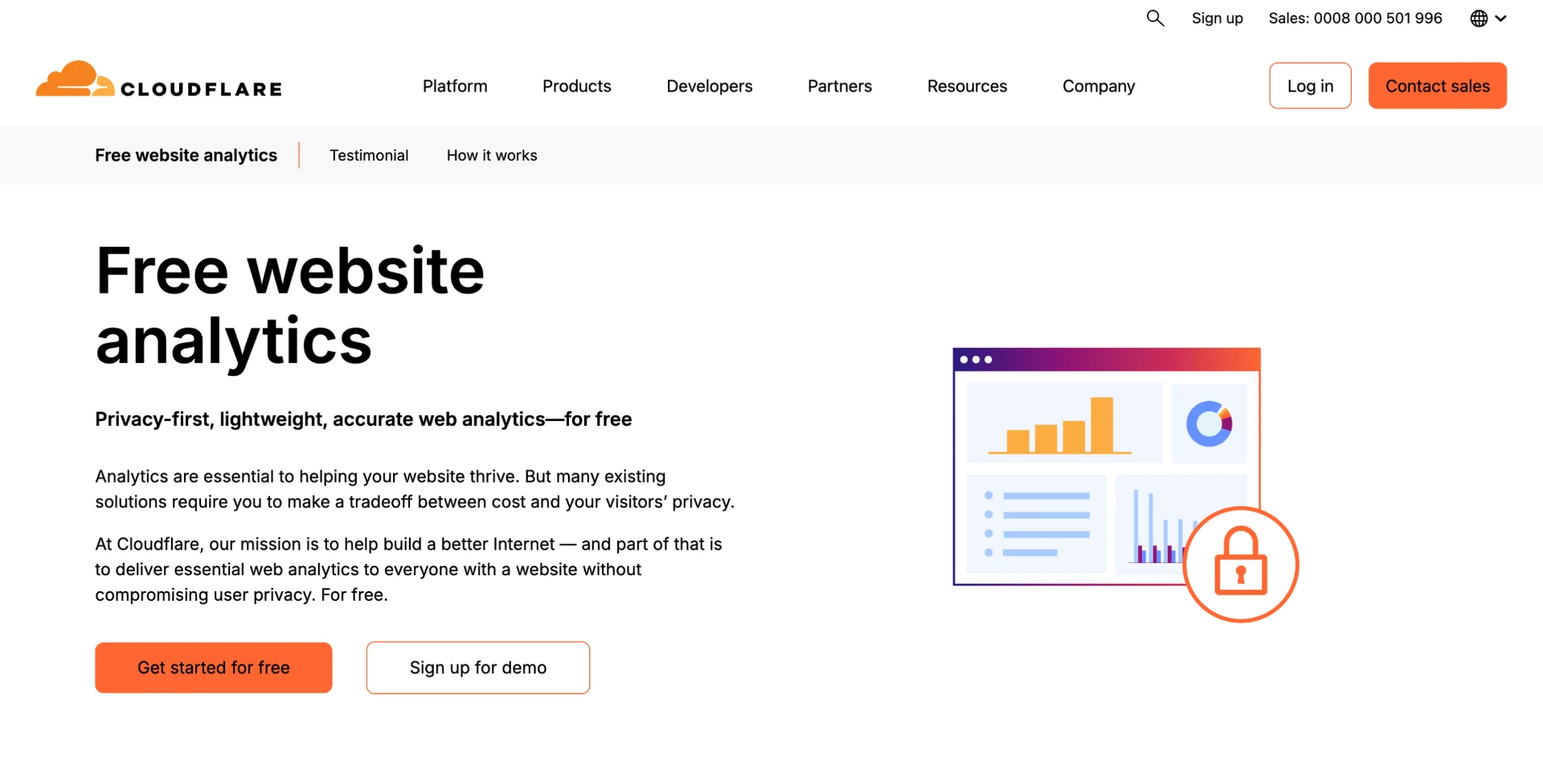
Cloudflare's analytics doesn't use cookies or local storage and
doesn't fingerprint visitors. You can add a one-line JavaScript snippet,
or switch it on if your site already runs through Cloudflare (Cloudflare).
Pros: free, private by design, very light, no
cookie banner needed for the analytics itself
Cons: basic reports only, no funnels or detailed
conversion tracking
Best for: blogs, portfolios and small business
sites that just need the numbers
Cloudflare Web Analytics dashboard
5. Umami: best open-source tracker for simple stats
Price: Free to self-host. Umami Cloud has a free
Hobby plan with 6 months of data history, plus paid plans with longer
history (Umami
docs).
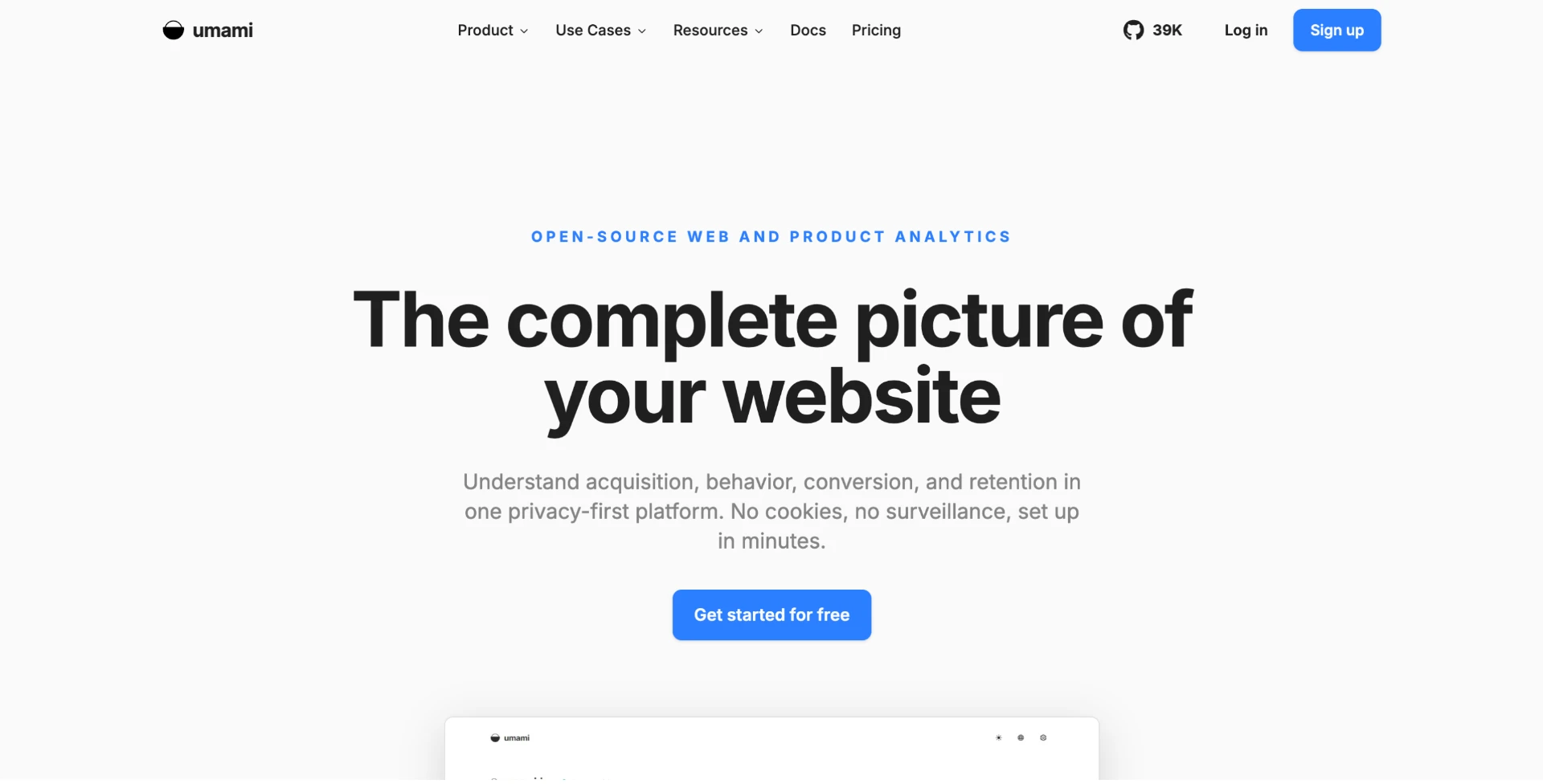
Umami gives you a clean one-page dashboard of visitors, pages,
referrers, countries and devices, without cookies.
Pros: open source, cookie-free, fast, great free
option for side projects
Cons: self-hosting needs a server and some
technical skill, fewer marketing features than GA4
Umami dashboard
6. Matomo: best self-hosted Google Analytics alternative
Price: Free self-hosted (unlimited sites, users and
hits). Matomo Cloud starts at $26 per month for 50,000 hits (FrontDesk
Review).
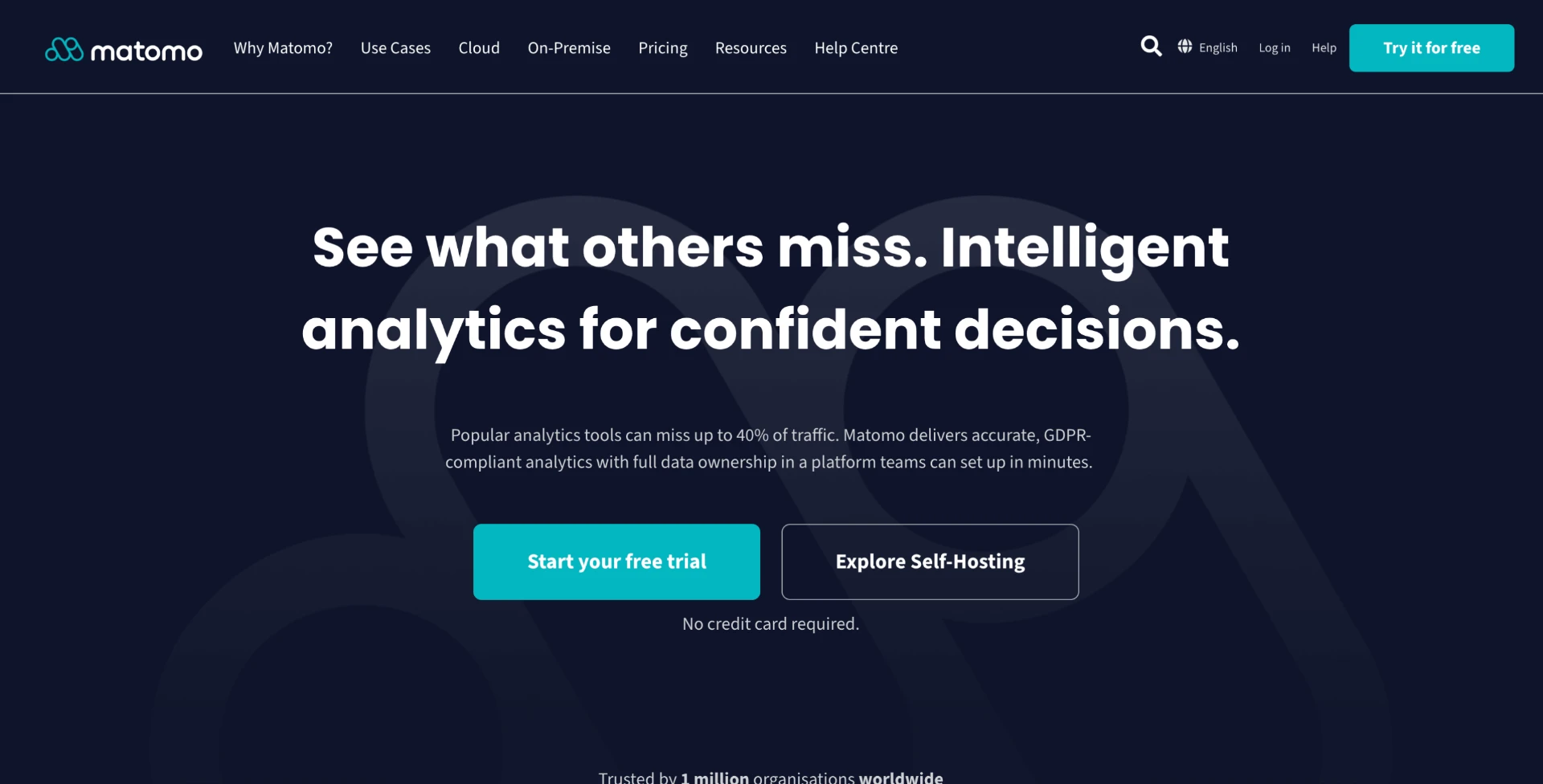
Matomo is the closest thing to GA4 that you fully own. It covers
goals, e-commerce, funnels and segments, and you can run it without
cookies.
Pros: 100% data ownership, strong privacy
controls, familiar GA-style reports
Cons: self-hosting means you handle updates and
security, heatmaps and some features are paid plugins
Matomo dashboard
7. Plausible: best privacy-first paid tracker
Price: From $9 per month, 30-day free trial, no free
plan (ToolPick).
A free self-hosted Community Edition exists for technical users.
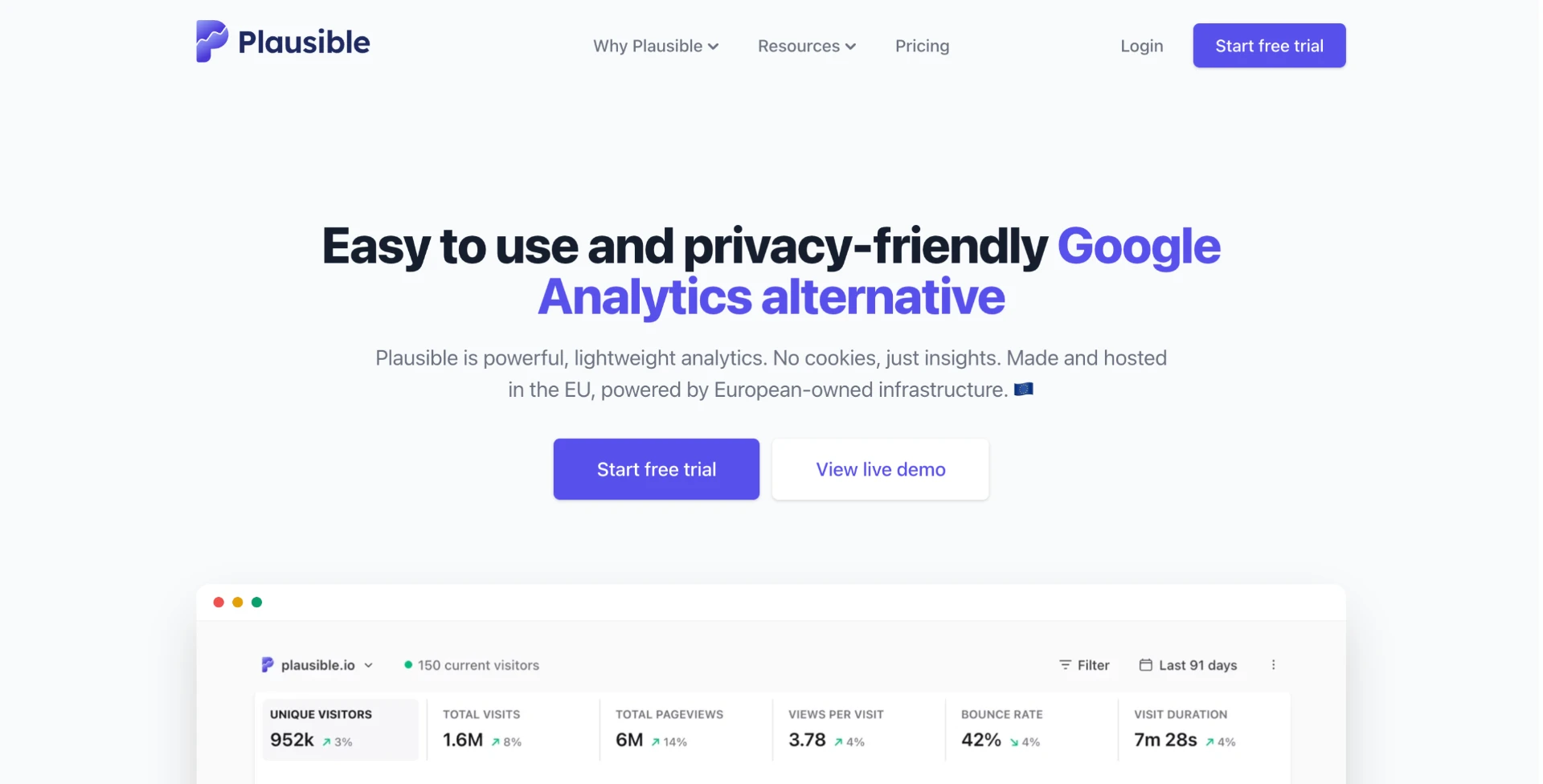
Plausible shows everything important on one screen: visitors,
sources, pages, countries, devices and goals. No cookies, no personal
data.
Pros: dead simple, lightweight script,
privacy-friendly, good for client reporting
Cons: no free cloud plan, not built for complex
funnels or product analytics
Plausible dashboard
8. StatCounter: best for live visitor logs
Price: Free basic plan with a limited recent-visitor
log. Paid plans from €9 per month with a 30-day trial.
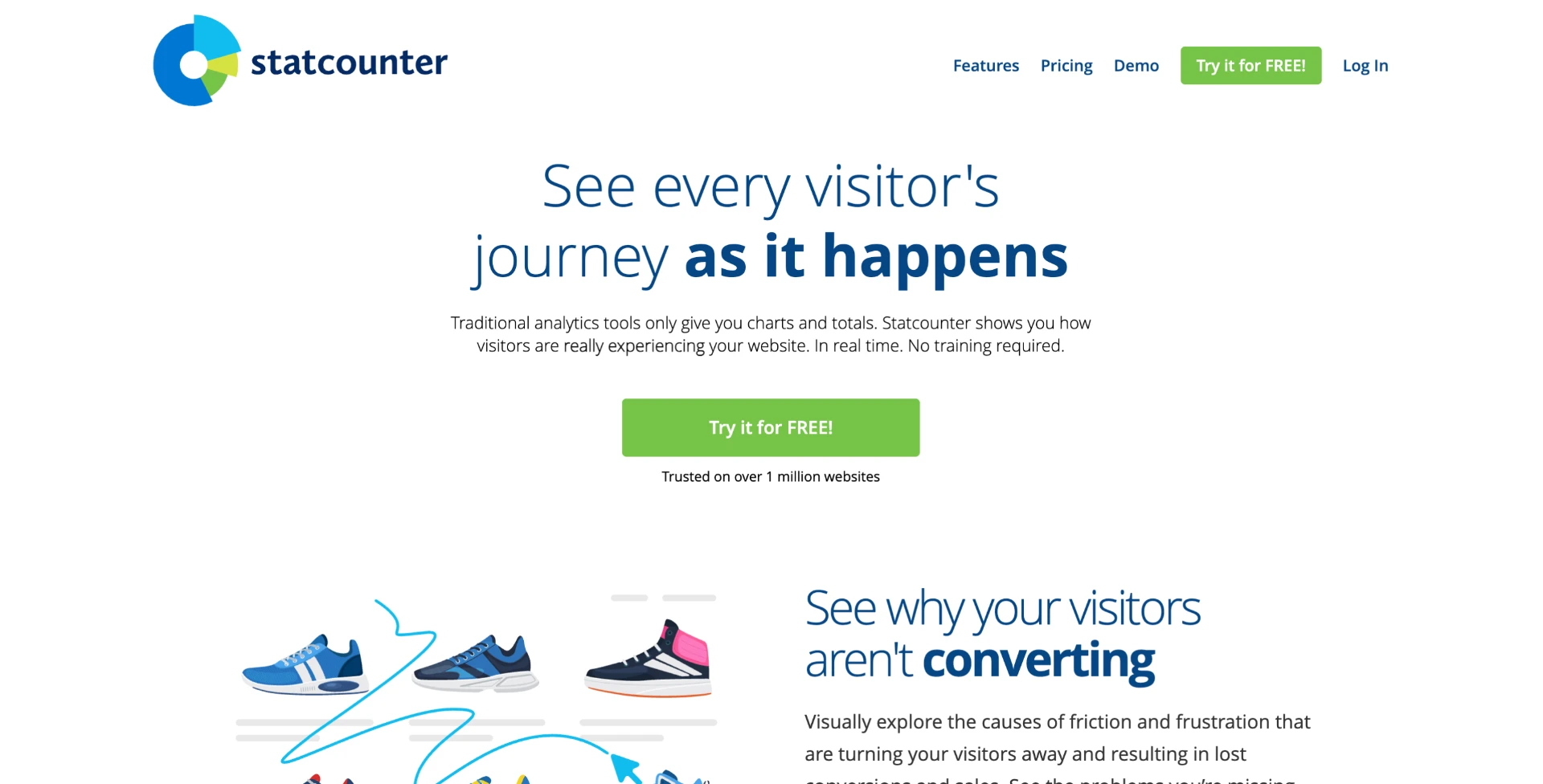
One of the oldest trackers around, and still handy if you like seeing
individual visits as they happen: pages viewed, referrer, location,
browser and device.
Pros: easy, real-time visitor log, works on
almost any site
Cons: dated interface, free plan keeps very
little history
StatCounter dashboard
9. Hotjar (now part of Contentsquare): best for heatmaps plus surveys
Price: Free basic plan with limited daily sessions.
Paid plans from about $32 per month on annual billing. Hotjar's pricing
is moving into Contentsquare's plans, so new buyers may see different
packages (Usercall).
Hotjar combines heatmaps and recordings with on-site surveys and
feedback widgets, so you see what users do and hear why.
Pros: surveys and feedback in the same tool,
polished reports
Cons: free plan is tight, pricing is in flux,
Clarity covers the basics for free
Hotjar dashboard
10. Crazy Egg: best for heatmaps with A/B testing
Price: From $24 per month, with a free trial (Capterra).
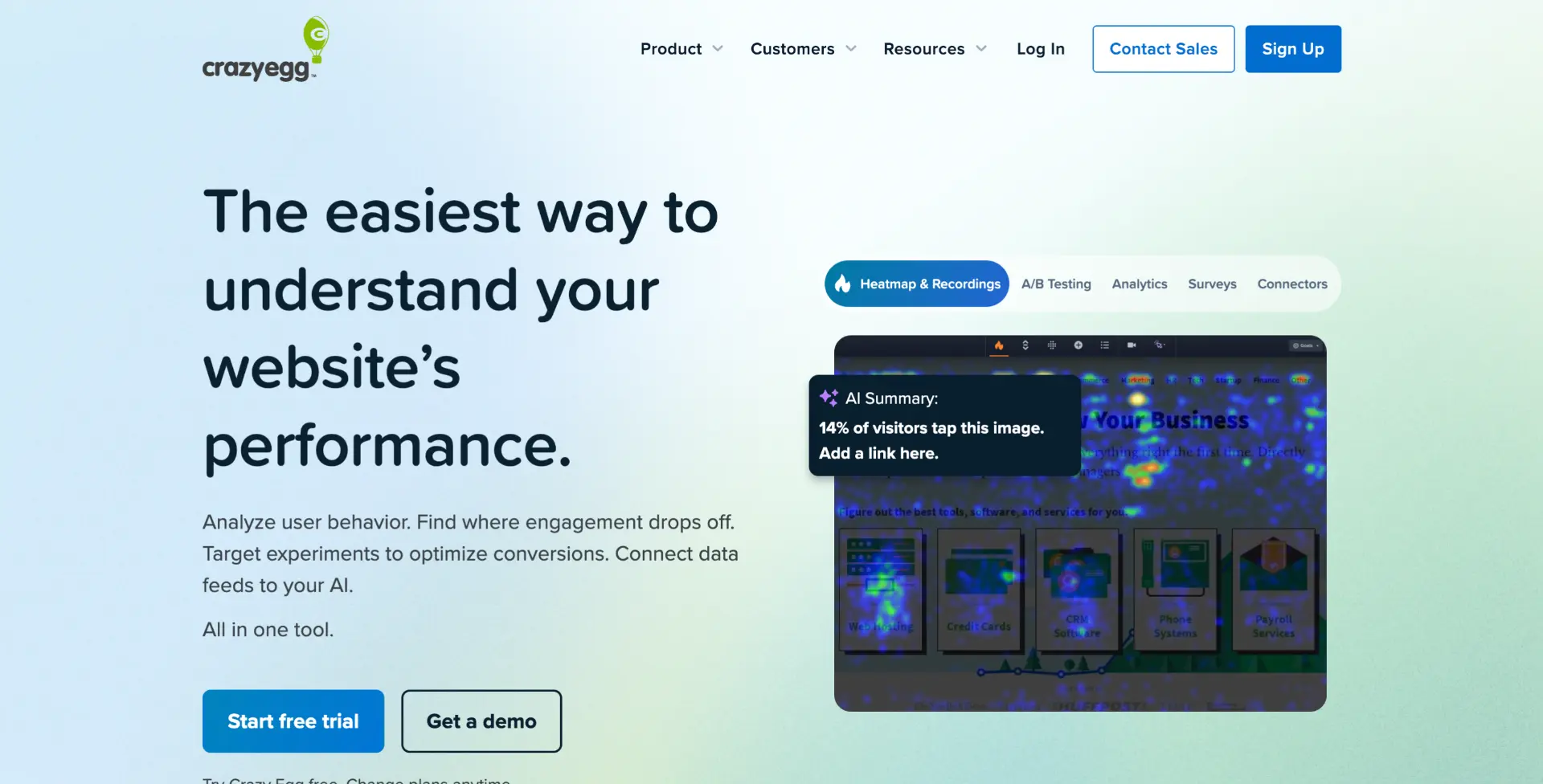
Crazy Egg was in our original list, and it's still a solid pick. It
offers heatmaps, scroll maps, confetti reports, recordings and simple
A/B tests.
Pros: easy to read, A/B testing included, good
for landing page optimisation
Cons: paid only, overlaps heavily with free
Clarity for basic heatmaps
Crazy Egg dashboard
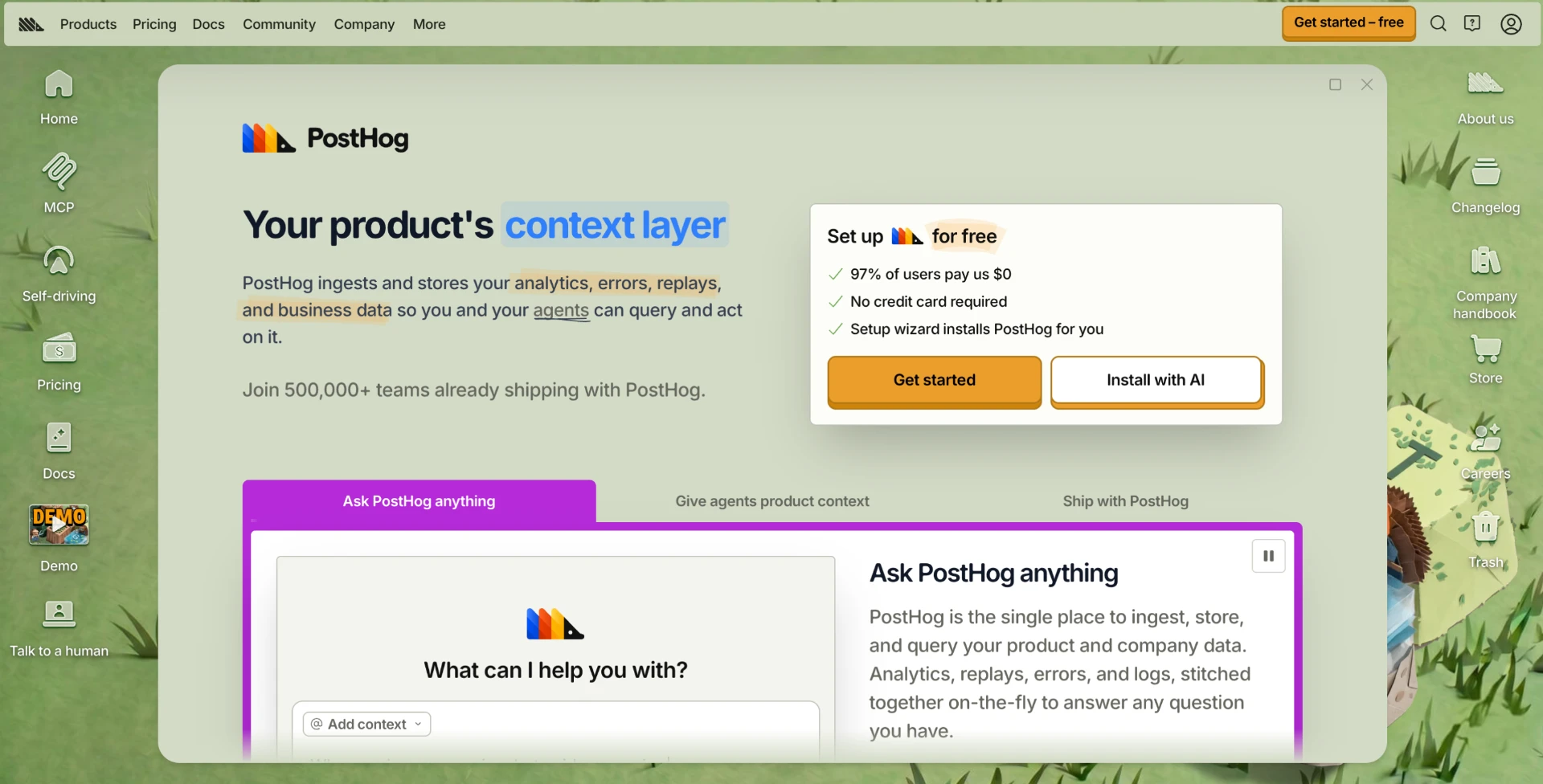
11. PostHog: best all-in-one for product teams
Price: Web analytics free up to 1 million events per
month, then pay as you go (PostHog).
PostHog bundles web analytics, product analytics, session replay,
feature flags and A/B testing in one open-source platform.
Pros: very generous free tier, one tool instead
of five, great for SaaS and apps
Cons: more than most marketing sites need, setup
takes some technical help
PostHog dashboard
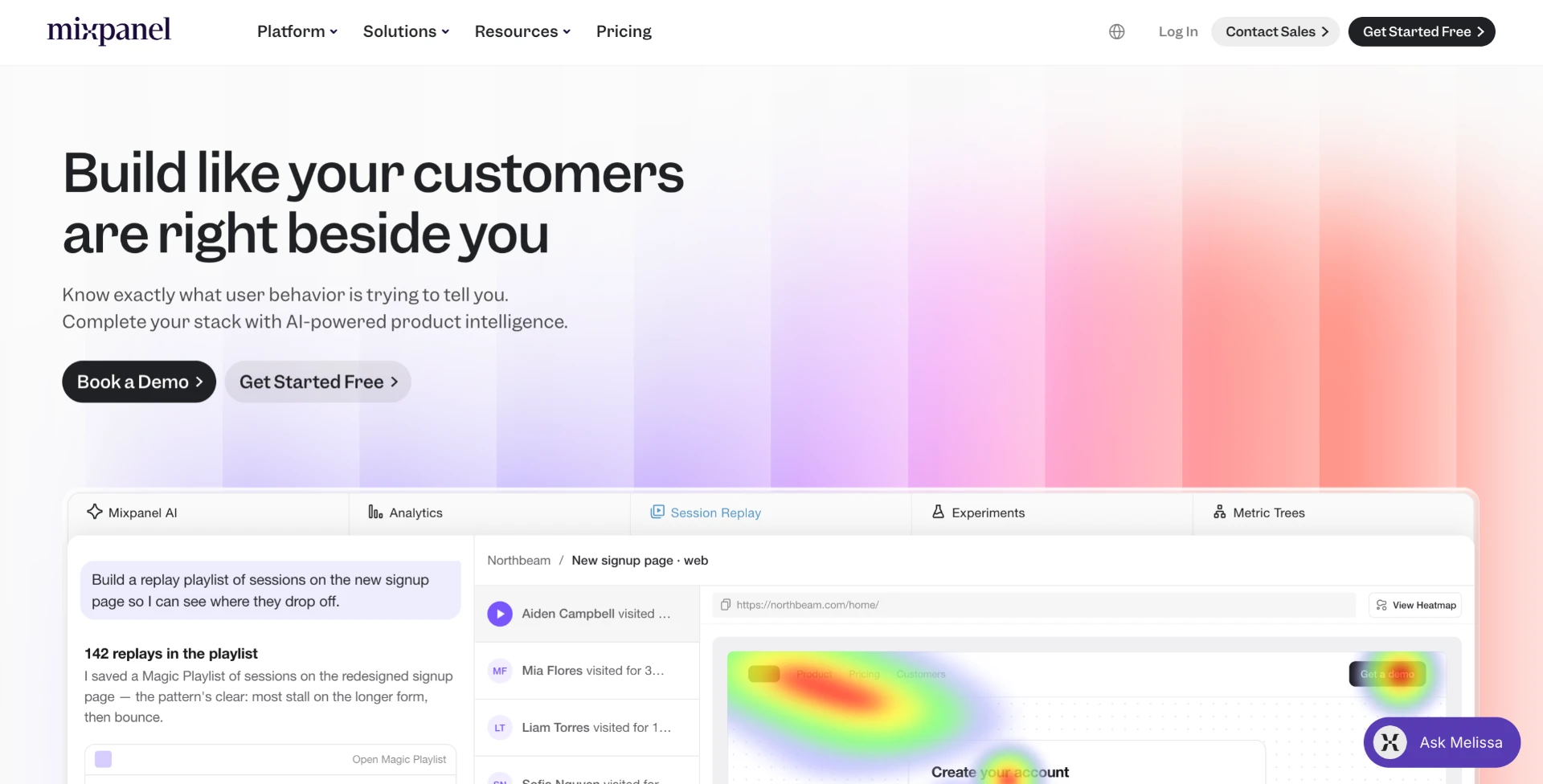
12. Mixpanel: best for funnels and user journeys
Price: Free up to 1 million events per month, with
unlimited seats and 10,000 session replays. Growth plan charges $0.28
per 1,000 events beyond that (Usercall).
Mixpanel tracks what users do step by step, so you can see where
people drop out of a sign-up or checkout flow. It replaces Kissmetrics
from our old list.
Pros: excellent funnel and retention reports,
free tier is generous
Cons: event-based setup needs planning, not a
page-view tracker
Mixpanel dashboard
Part 2: Tools to check any website's traffic (competitors included)
These tools don't need access to the site. They estimate traffic from
clickstream panels, search rankings and other data. Use them to compare
sites and spot trends, not as exact counts.
13. Similarweb: best for any site's total traffic and sources
Price: Free plan shows the top 5 results per metric
and one month of data, with no exports. Paid plans start at $199 per
month billed monthly, or $1,500 per year on the Starter plan (Spike).
Type in a domain to see estimated monthly visits, traffic sources
(search, direct, social, referral, paid), top countries and similar
sites. The free Chrome extension shows the same snapshot for whatever
site you're on.
Pros: covers all traffic channels, not just SEO,
quick free snapshot
Cons: estimates are weaker for small sites, full
data is expensive
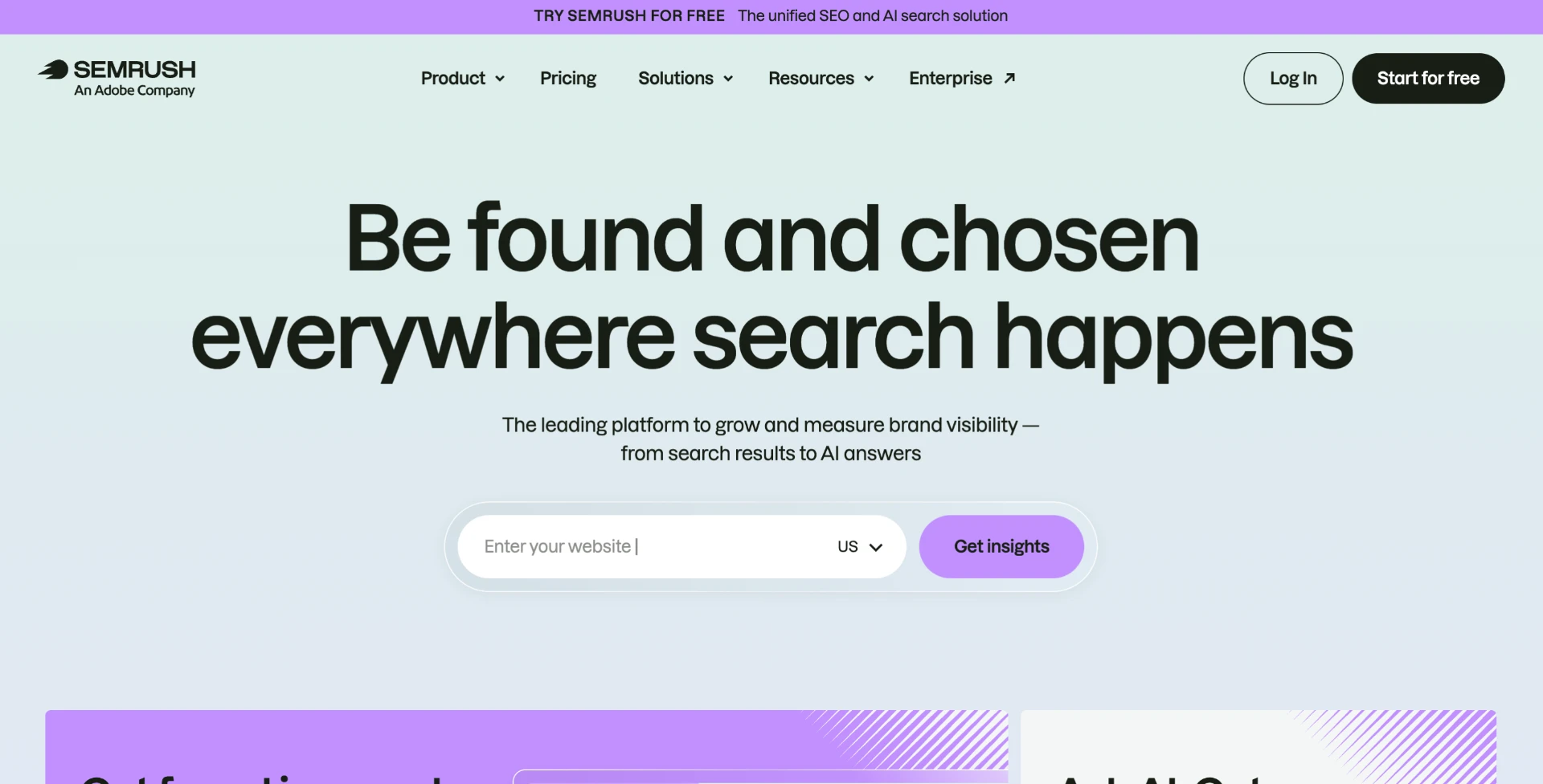
14. Semrush: best paid competitor traffic and SEO tool
Price: Free account with limited daily requests. Pro
plan $139.95 per month (Capterra).
Semrush shows a competitor's estimated organic and paid traffic, top
pages, keywords and backlinks, all in one place. It's the tool I'd pick
if you need competitor traffic and SEO research together.
The free Website Traffic Checker shows a site's estimated organic
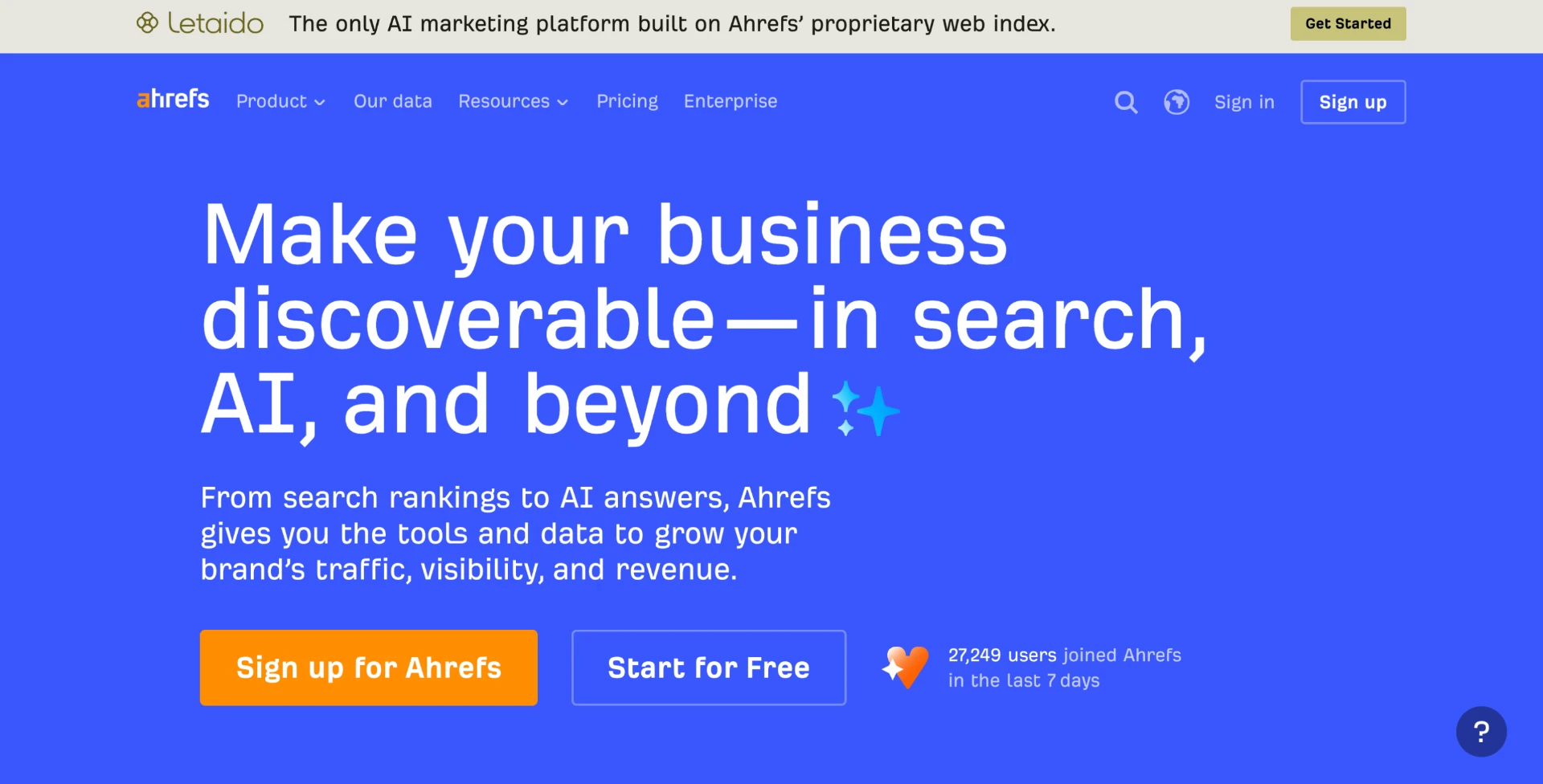
search traffic, top pages and top keywords. For your own site, Ahrefs
Webmaster Tools is also free once you verify ownership.
Pros: strong organic data, generous free
checker, best-in-class backlink data
Cons: focuses on search traffic only, paid plans
are expensive
Ahrefs dashboard
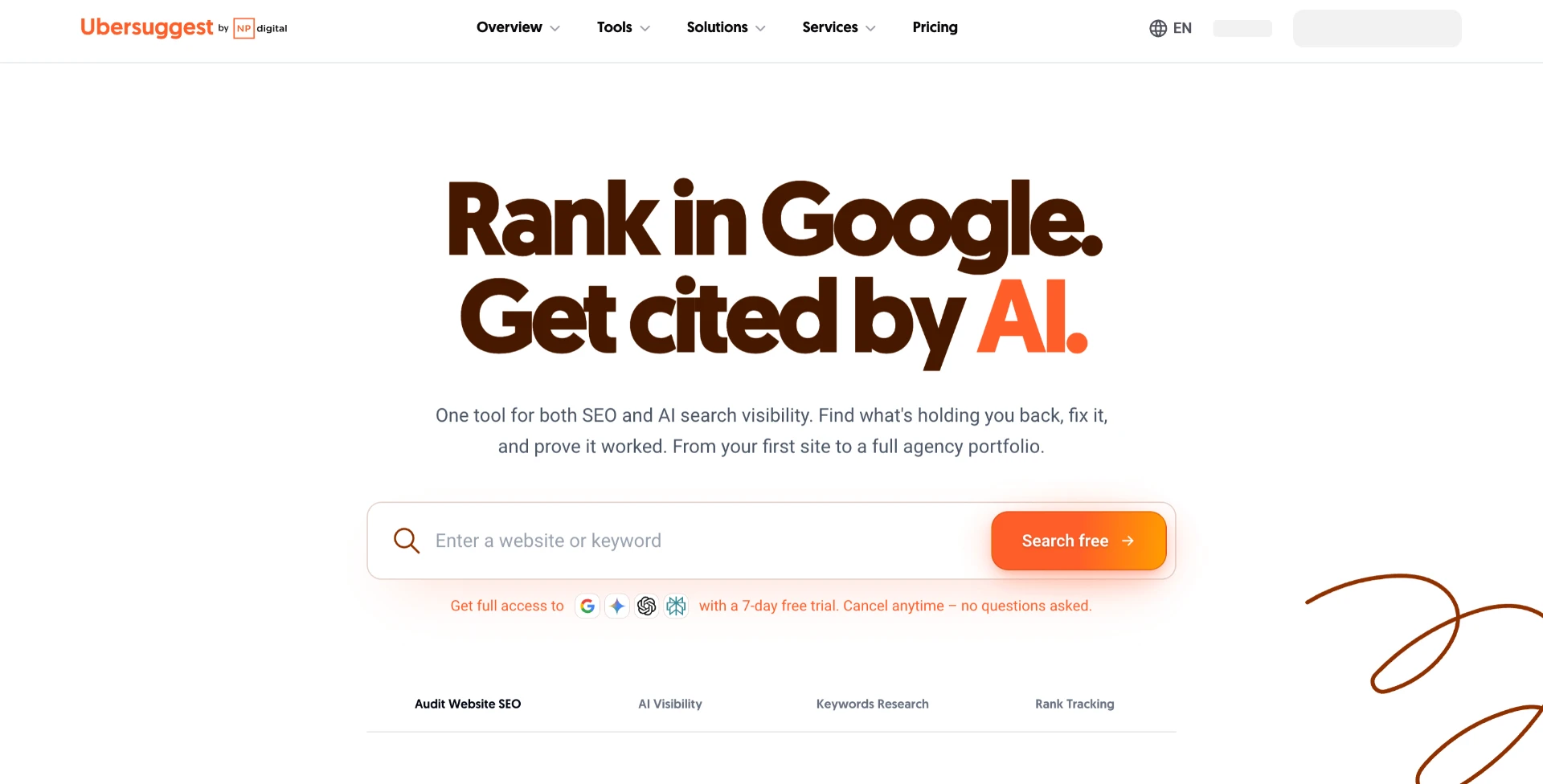
16. Ubersuggest: best budget competitor checker
Price: Free with limited daily searches. Paid plans
from $29 per month, with a lifetime option (Capterra).
Ubersuggest shows estimated organic traffic, top pages and keywords
for any domain, at a fraction of Semrush or Ahrefs pricing. It also has
a free Chrome extension.
Pros: cheap, easy for beginners, lifetime
deal
Cons: smaller database, estimates can be rough
for niche sites
Ubersuggest dashboard
How to check a website's monthly visitors for free
Open Similarweb
and enter the domain. Note the monthly visits and the traffic source
split.
Run the same domain through Ahrefs' free Website Traffic Checker
to see its organic search traffic and top pages.
Compare the two. If organic is most of the Similarweb total, the
site depends on SEO. If not, look at its paid, social and referral
sources.
Repeat for 3 to 5 competitors and put the numbers side by side.
The trend matters more than the exact figure.
You no longer have to dig through reports to find out why traffic
dropped. GA4's Analytics Advisor answers questions in plain English, and
Clarity uses Copilot to summarise sessions and heatmaps. Treat their
answers as a starting point, then check the underlying report before you
act.
2. Tracking traffic from AI search
Visits from ChatGPT, Perplexity, Gemini, Claude and Copilot are small
for most sites but growing, and they can convert well. A Microsoft
Clarity study across 1,277 domains found AI referrals converted to
sign-ups at 1.66%, against 0.15% for organic search (Digital
Applied).
To see this traffic in GA4, build a segment in Explore using
Session source matches regex (Victorious):
Two limits to know: clicks from Google's AI Overviews and AI Mode are
counted as normal organic search, and AI visits that don't pass a
referrer show up as Direct. Our guide to generative
engine optimisation covers how to earn more of these visits.
3. Privacy-first and cookie-free tracking
More visitors reject cookie banners, and every rejection is a visit
GA4 may not record fully. That's why cookie-free tools like Cloudflare
Web Analytics, Plausible, Umami and Matomo keep growing. Many sites now
run two tools: GA4 for marketing and ads, plus a cookie-free tracker as
a sanity check on real visitor numbers.
4. Consent Mode is a must if you run Google Ads
If you have visitors from the EU or UK and run Google Ads, set up
Google Consent Mode v2 so GA4 and Ads can model conversions from people
who decline cookies. Without it, your remarketing lists and conversion
data shrink.
5. Competitor traffic data is getting harder to trust
AI answers and zero-click searches mean fewer clicks per search
across the web, so estimates based on rankings can overstate traffic for
some sites. Use competitor tools to compare trends and channels, and
avoid quoting their numbers as fact. See our take on zero-click
search.
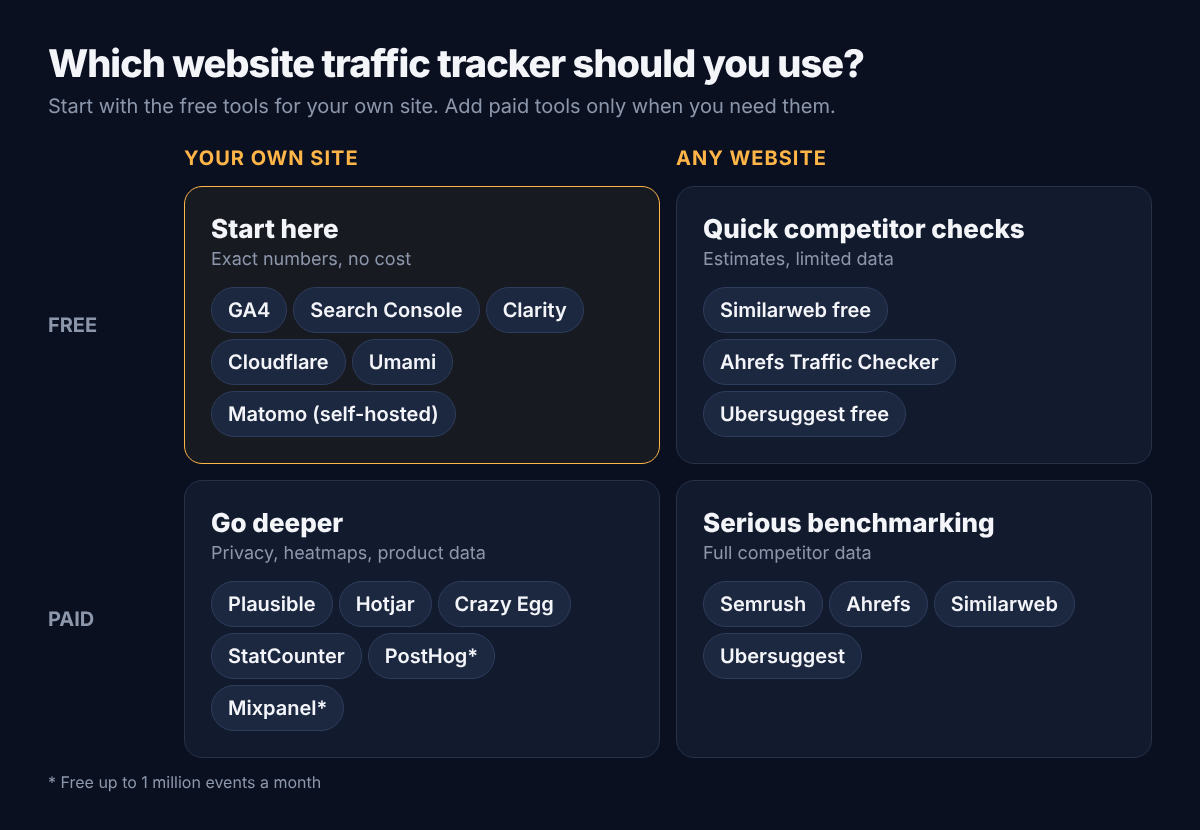
How to choose your website traffic tracker stack
You don't need all 16. Most sites do well with two or three tools
that each do one job.
Need help setting up tracking that actually ties traffic to leads and
sales? Our team can audit your analytics as part of an SEO
plan.
FAQ: website traffic trackers
What is the best free website traffic tracker?
Google Analytics 4 is the best free all-rounder. Pair it with Google
Search Console for search data and Microsoft Clarity for heatmaps, and
you have a complete free setup.
How can I track website traffic for free?
Add GA4 or
Cloudflare Web Analytics to your site, verify your site in Google Search
Console, and check both weekly. All three are free.
How do I check how many monthly visitors a website gets?
For your own site, use GA4 or any tracker in Part 1. For
someone else's site, enter the domain in Similarweb's free plan or
Ahrefs' free Website Traffic Checker. Remember these are estimates.
Can I see a website's daily visitors?
On your own
site, yes: GA4, StatCounter, Plausible and Cloudflare all show daily and
real-time visitors. For other sites, most tools show monthly estimates,
and daily figures need a paid plan.
Is there a browser extension to check website traffic?
Yes. Similarweb's free Chrome extension shows
estimated visits and traffic sources for the site you're on, and
Ubersuggest has a free extension for SEO traffic estimates.
Is it legal to spy on competitor website traffic?
Using tools like Similarweb, Semrush or Ahrefs is standard practice.
They estimate traffic from public and panel data, so you never touch
anyone's private analytics.
How do I track traffic from ChatGPT and other AI tools?
In GA4, create a segment with Session source matching
the regex in our trends section. Microsoft Clarity also shows AI bot
visits and AI citations on Microsoft surfaces.
What metrics should I monitor?
Users, sessions,
engaged sessions, traffic sources, top landing pages, key events
(conversions) and conversion rate. Bounce rate matters less in GA4,
which uses engagement rate instead.
Final thoughts
Start with the free trio: GA4, Search Console and Clarity. Add a
cookie-free tracker if privacy matters to your audience, and a
competitor tool when you're ready to benchmark. Whatever you choose, set
up conversions first, because traffic only matters when you can see what
it turns into.