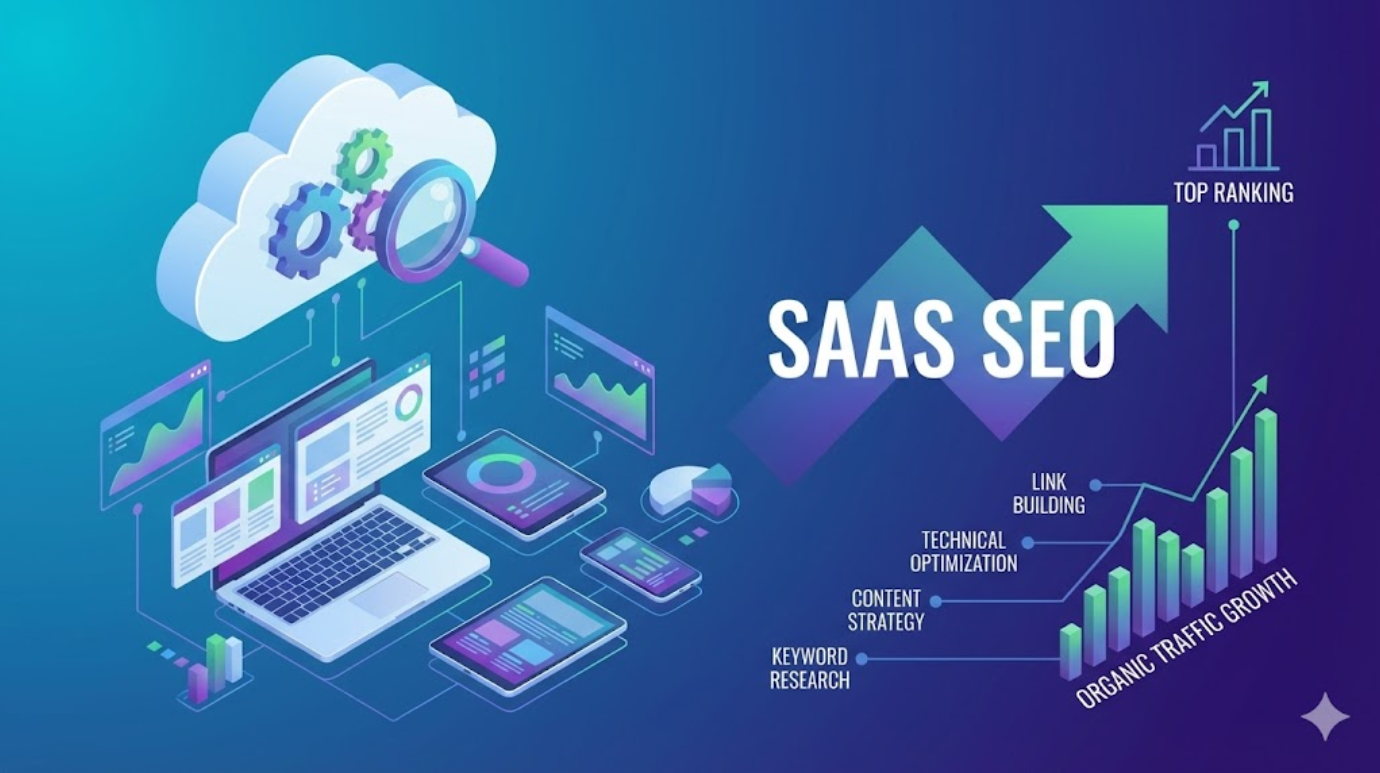
SaaS SEO focuses on attracting users who are actively searching for solutions, features, or comparisons related to software products. Unlike traditional models, SaaS growth depends on recurring revenue, user activation, and long-term retention. SaaS SEO aligns content, keywords, and landing pages with these stages of the customer journey.
How Saas Function:
- It targets problem-aware and solution-aware queries to capture early interest.
- It supports trials and demos by optimizing product-led landing pages.
- It builds authority through consistent educational content and feature-focused assets.
- It strengthens acquisition by aligning search intent with product use cases.
- It enhances retention by ranking content that educates existing users, thereby increasing their understanding.
Why SaaS Companies Need a Different SEO Approach
SaaS businesses require a more technical, intent-driven framework compared to traditional industries. The buying journey involves multiple touchpoints, making saas seo services essential for scalable execution.
- Longer sales cycles require deeper content coverage.
- Users compare multiple software products before converting.
- Feature-level keywords are crucial for visibility.
- Trial and demo conversions depend on optimized activation paths.
Role of SaaS SEO Services in Scaling Growth
Professional teams enhance growth by applying structured processes and data-backed frameworks.
How experts support scale:
- Build product-led content funnels.
- Implement technical improvements tailored to SaaS platforms.
- Optimize feature pages and integrations for targeted traffic.
- Align keyword strategy to each stage of the SaaS user lifecycle.
Challenges Unique to SEO for SaaS Companies
SEO for SaaS companies involves several constraints that require specialized strategies.
Common challenges:
- Highly competitive SERPs for software-related keywords.
- Frequent product updates require continuous content adjustments.
- Need to rank for both problem-based and feature-based terms.
- Difficulty differentiating from similar SaaS competitors.
- Complex onboarding journeys that demand precise content alignment.
These challenges make seo for saas and structured execution essential for predictable organic growth.
What Makes SaaS SEO Different from Traditional SEO?
SaaS SEO differs from traditional search optimization because SaaS users follow multi-step journeys, evaluate product features, and compare solutions. Effective strategies align content with intent, activation needs, and subscription-driven growth patterns.
Different Search Intent Types in SaaS SEO
SaaS SEO focuses on multiple search intents such as problem-aware, solution-aware, comparison, and feature-specific queries. These intent types help SaaS companies target users at different decision stages. Effective SEO for SaaS requires mapping these intents to content that informs, guides, and supports product evaluation.
Longer and Multi-Touch Buyer Journeys
SaaS customers move through extended buying cycles involving research, comparisons, trials, and demos. This multi-touch path requires consistent content across each touchpoint. SaaS SEO services address this journey by building assets that educate and nurture users from initial discovery to product activation and eventual purchase.
Why Feature and Problem-Aware Keywords Matter
SaaS users search for solutions tied to features and specific pain points. Targeting these keywords creates high-intent traffic that aligns with product capabilities. This approach strengthens relevance, improves conversions, and supports SEO for SaaS companies by connecting search behavior directly to product functions.
Recurring Revenue Model and Its SEO Impact
SaaS companies rely on recurring revenue, making long-term user acquisition essential. SaaS SEO helps achieve stable organic growth by reducing dependence on ads. Retention-focused content also improves customer lifetime value by educating users, reducing churn, and supporting continuous product adoption over time.
Why Traditional SEO Tactics Fail in SaaS
Traditional SEO focuses on basic keywords, broad topics, and static pages. SaaS SEO demands deeper intent mapping, rapid content iteration, and alignment with product updates. Standard tactics cannot support shifting user needs or fast-paced feature cycles common in SaaS environments.
SEO for SaaS Requires Product-Centric Content Mapping
A product-led strategy places features, use cases, and onboarding paths at the content core. SaaS SEO services use this approach to connect user intent with product value. This mapping supports trials, demos, and activation by guiding prospects toward relevant workflows and solutions.
Core Components of an Effective SaaS SEO Strategy
A successful SaaS SEO strategy relies on precise targeting, technical accuracy, and product-focused content. It aligns search demand with user activation, ensuring scalable and predictable growth for SaaS companies.
Keyword Research for SaaS
Targeted keyword research ensures saas seo aligns with real user needs.
- Feature – Feature keywords help seo for saas companies capture users comparing functionalities during product evaluation.
- Problem – Problem keywords attract prospects seeking solutions before selecting software, supporting early-stage engagement.
- Use-Case Terms – Use-case terms guide saas seo services to map content to specific workflows and industry applications.
Creating Product-Led Content That Drives Activation
Product-led content helps users understand the software through demonstrations, use-case guidance, and solution-focused narratives. This approach strengthens SaaS SEO by aligning features with intent-based queries. It also supports SEO for SaaS companies aiming to increase activation and trial engagement.
- Explaining features through real workflows
- Mapping content to activation milestones
- Integrating tutorials, templates, and product comparisons
- Supporting journeys through targeted SaaS SEO services
Optimizing Landing Pages for Trials, Demos & Signups
Optimizing landing pages is essential in saas seo because it directly influences trial and demo conversions. Clear messaging and structured layouts help increase user activation across different funnel stages.
- Highlight product value with concise feature blocks.
- Use intent-focused CTAs aligned with seo for saas companies.
- Add trust signals to support saas seo services.
- Ensure pages load fast and follow clean UX principles.
Technical SEO Essentials for SaaS Companies
Technical foundations shape the success of saas seo. SaaS websites require fast performance, structured architecture, and clean indexation to support scalable growth. Strong internal linking, schema markup, and crawl optimization help search engines understand complex feature pages.
These elements improve seo for saas companies by supporting consistent visibility across product, solution, and integration pages.
Link Building Strategies Designed for SaaS SEO
Effective saas seo relies on authoritative backlinks built through value-driven outreach. SaaS brands gain credibility by earning links from technology blogs, integration partners, and industry publications.
A focused approach strengthens seo for saas by improving topical authority and ranking stability. Using tailored digital PR and thought-leadership content elevates competitiveness for scaling software products.
Leveraging SaaS SEO Services for Scalable Content Production
Professional saas seo services help teams publish high-quality content at scale. Agencies streamline keyword research, topic clustering, and product-led content workflows to align organic traffic with activation goals.
This improves seo for saas companies by creating consistent, optimized content across the funnel. A structured production system supports continuous visibility and sustained user acquisition.
How SaaS SEO Drives Signups, MRR, and LTV?
SaaS SEO improves acquisition, activation, and retention by aligning search intent with the product’s core value. It helps users discover the software at every stage of the funnel, from initial problem awareness to final purchase decisions. This makes saas seo a growth-focused framework rather than a simple traffic strategy.
- Attracts high-intent users – SEO for saas ensures visibility for keywords tied to features, use cases, and pain points. These users convert faster because they are already searching for solutions.
- Improves trial and demo activation – Optimized landing pages guide visitors toward free trials and demos. Clear messaging, structured content, and strong internal linking help users understand the product quickly, increasing activation rates.
- Reduces customer acquisition cost (CAC) – Organic traffic compounds over time. As seo for saas companies scales, dependency on expensive paid campaigns decreases, improving margin efficiency.
- Boosts monthly recurring revenue (MRR) – A consistent stream of bottom-funnel traffic drives stable signups. Product-led content encourages users to take action based on real product capabilities, strengthening revenue predictability.
- Enhances customer lifetime value (LTV) – Educational content, feature tutorials, and search-optimized help resources improve user retention. When users understand how to extract more value from the software, churn decreases.
- Supports long-term scalability – Specialized saas seo services ensure continuous optimization, enabling SaaS companies to expand into new keyword clusters as the product evolves.
When Should You Invest in SaaS SEO?
Investing in SaaS SEO becomes essential when a software product needs consistent, qualified traffic without relying heavily on paid campaigns. Early-stage companies should consider it once the core product is stable and the value proposition is clear.
This ensures search demand aligns with features and use cases. Growth-stage teams benefit from SEO for SaaS when they expand into new markets and require scalable acquisition paths that reduce dependency on ads.
Companies experiencing rising CAC can invest in saas seo services to improve long-term visibility and capture high-intent users across the funnel.
- When organic search shows early traction but lacks structured optimization.
- When competitors dominate SERPs with product-led or comparison content.
- When new features or modules require dedicated landing pages to drive signups.
- When content production needs a reliable framework for ranking and conversions.
- When fragmented blog content needs alignment with user intent and activation paths.
- When enterprise buyers conduct extensive research before requesting demos.
- When internal teams lack bandwidth for technical optimization or keyword expansion.
Mature SEO for SaaS companies also becomes important before scaling internationally, entering competitive categories, migrating platforms, or preparing for fundraising, where predictable organic growth strengthens overall product positioning.
SaaS SEO FAQs
What is SaaS SEO, and how is it different from normal SEO?
SaaS SEO focuses on recurring revenue, feature-led intent, and product activation, unlike normal SEO. It aligns seo for saas companies with user onboarding, trial signups, and long-term retention.
Do early-stage SaaS startups really need SEO?
Yes. Early SaaS startups need saas seo to build sustainable organic demand, validate problems–solution fit, and reduce paid acquisition costs. Strategic seo for saas supports long-term growth from the start.
